
The Transformation of In-Store Logistics
Updated: Sep 1
The COVID-19 pandemic reinforced the logistics role of stores as key links in omnichannel distribution. It also accelerated the need to transform them to offer more diversified services while maintaining the same high standard, regardless of the channel consumers use. How can retailers effectively achieve this transformation?
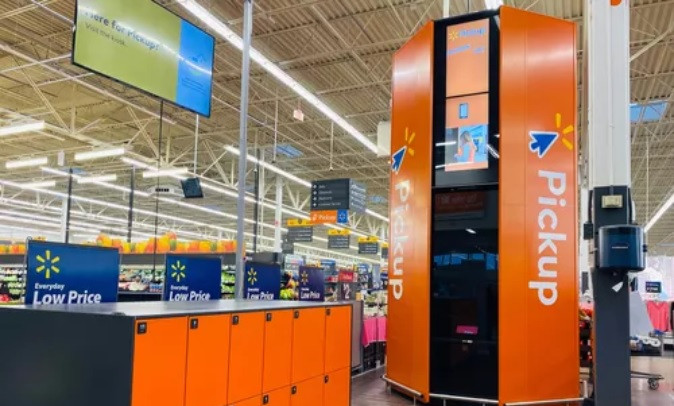
In-store logistics is undergoing rapid development. With the growth of e-commerce and omnichannel retail, the logistics role of the store is evolving and becoming essential. Stores — especially mid-size and large-format ones — now need to organize themselves as effectively as possible to manage a range of logistics services: pick up in store, click & collect, drive, ship from store, returns (including from online sales), and more. All of this while continuing to handle traditional retail activities, such as shelf replenishment and assisted selling.
Examples of store-managed logistics services in an omnichannel context:
Pick up in store: an online order prepared at the distribution center and delivered to the store for customer pickup.
Click & collect: an online order prepared in-store (using store inventory) for customer pickup.
Drive: an online order prepared in-store or at a distribution center for pickup by a customer in their vehicle.
Ship from store: an online order prepared in-store (typically using store inventory) for home delivery or delivery to a pickup point.
The pandemic intensified this logistics transformation of stores. During periods of closure, stores had to convert into true micro-distribution centers, limiting their activity to preparing orders for pickup or home delivery. And since reopening, some customers — having grown accustomed to the convenience of e-commerce or wanting to avoid crowds in stores — continue to shop remotely.
Reliable Inventory to Ensure Product Availability…
In terms of logistics processes and information systems, stores need solutions that are simpler, more intuitive, and more flexible than the operations of a traditional distribution center. At the point of sale, the main priority is ensuring product availability for the customer — and therefore, inventory reliability. It also means delivering fast, flexible service, rather than prioritizing productivity gains. Achieving this requires favoring solutions and systems designed specifically for in-store logistics.
Through our projects, we have observed — and helped optimize — solutions designed to improve store logistics operations. One key aspect, especially for larger-format stores, is managing inventory in the store's backroom. This inventory, traditionally used as a buffer for high-turnover or large-format shelf products, must now also support the picking of customers' online orders — particularly when the store is looking to minimize the impact of this activity on the sales floor, so as not to disrupt the experience of in-store shoppers.
RFID to Improve Inventory Reliability and Streamline Order Picking
One interesting approach we observed in an apparel/fashion store with tens of thousands of SKUs, some of which are stocked in the backroom, is the implementation of RFID. This technology enables tracking of stock movements in and out of the store's backroom. It also makes it easier to locate the product to be picked, without imposing the systematic scanning and location-management processes typical of a distribution center on the store. Equipped with a handheld terminal, the backroom operator is notified when a customer order arrives and given the precise location of the items to pick. Order preparation can then happen very quickly, limiting disruption to customers on the sales floor.
A "Lightweight" WMS to Optimize Without Overburdening Processes
Another trend worth noting is the development of store-specific WMS solutions (or "simplified" layers built on top of traditional WMS platforms) for store operations. Here again, the goal is to make inventory more reliable (with product location tracking within the store) and speed up order picking, without requiring the store to follow the same process discipline as a distribution center. This type of solution aims to make stock-movement reporting easier and logistics tasks more intuitive and simple. It's worth remembering that the store's core business remains dedicated customer service — and store staff don't necessarily have strong logistics expertise.
Automated Logistics Systems in Stores
With the rapid growth in order volumes to be prepared, process and IT adaptations are sometimes no longer enough. We are also seeing the emergence of logistics automation solutions — traditionally designed for distribution centers — now being applied at the scale of a single store.
For now, this remains limited to large-format stores that have a physical separation between the sales floor and the backroom — with the backroom becoming what is known as a micro-fulfillment center. The automated system can serve both shelf-replenishment needs and online order picking. The goal is twofold: minimize picking times through a goods-to-person approach, and increase storage capacity, allowing for a broader in-store assortment.
Automating In-Store Logistics: A Promising Market
The automation of store logistics remains a marginal phenomenon so far — but one with strong growth potential. Specialized research firm Interact Analysis forecasts spectacular growth in the micro-fulfillment center market: by the 2025–26 horizon, it is projected to be worth $5.5 billion, compared with just $136 million in 2020. This growth would be driven by the natural rise of e-commerce and amplified by lasting behavioral shifts linked to the COVID-19 crisis. As an example, at the end of 2019, Walmart launched an automation pilot for the backroom of one of its Supercenters in New Hampshire, USA, based on Alphabot mobile robots — developed by the startup Alert Innovation. This solution, deployed across an area of roughly 2,000 square meters (about 21,500 square feet), is expected to be extended to other Walmart stores soon.
Modular and Scalable Solutions
These automated systems can be installed in relatively small spaces, starting at around 1,000 square meters (about 10,800 square feet), though rarely below that, and can support 15,000 SKUs or more. Established players in distribution-center automation, such as Dematic, Knapp, and Swisslog, are entering the micro-fulfillment center market, sometimes alongside startups such as Takeoff Technologies, Alert Innovation, and Exotec. The latter recently deployed its automated system to manage drive-thru orders at a hypermarket in France.
Aiming to meet the specific needs of stores, these solutions are often modular, allowing them to adapt to different store formats and avoid excessive installation investment. In addition, to further limit CAPEX, retailers can consider centralization strategies within the same urban area. In this model, a store with a larger, automated backroom can serve as a regional micro-fulfillment center for online customers and smaller stores in the same region.
Projects That Remain Complex
While operating an automated solution should be as simple as possible for the store, designing one is far from easy. Several aspects must be carefully considered and integrated into a store automation project: coordination across different flows (receiving, shelf replenishment, order picking, returns), consolidation with items to be picked on the sales floor, and proper management of the operating schedule — accounting for likely peak hours.
Work organization, in a broader sense, also needs to be rethought in terms of:
Staff profile (detail-oriented, comfortable with systems, autonomous, flexible, etc.)
Team structure (specialized or multidisciplinary)
Governance, particularly for operational decisions (such as prioritizing between traditional store activities and online orders)
Performance indicators
Training
Collective and individual recognition systems
Real Differentiation for Successful Automation Projects
This is, therefore, a major challenge that — just as in a distribution center — requires strong coordination among all project stakeholders: retailers, automated-equipment manufacturers, integrators, and consultants. The payoff is a genuine differentiator for online customers who expect fast, efficient service.
Note: this article was originally published on the Diagma website | smarter and more sustainable supply chain designers.


